
Why Ballet Teachers Say “Pull Up”: Core Engagement for Young Dancers
Ask any ballet student which correction they hear most, and “pull up” will be near the top of the list. It is one of the oldest cues in ballet teaching, and also one of the most misunderstood. Good ballet posture is not about standing stiffly or lifting the chest. It is about organizing the whole body so it can move with control, balance and ease. This guide explains what the cue really means, how correct ballet posture is built from head to feet, and how young dancers develop it over time.
Key Takeaways
The short version, for busy parents and dancers:
- “Pull up” means lengthening through the whole body, not raising the chest or shoulders.
- Correct ballet posture stacks the head, ribcage, pelvis, knees and feet in balanced alignment.
- Core engagement for dancers is gentle, deep support that never requires holding the breath.
- Good ballet alignment makes balances and turns easier, and turnout should never be forced.
- Children build posture gradually through clear cues, repetition and age-appropriate teaching.
What Is Ballet Posture?
Ballet posture is the way a dancer organizes the body so that every movement starts from a steady, balanced centre. Teachers often call this “placement”: the head sits over the spine, the ribcage sits over the pelvis, and body weight is spread evenly over the feet. From that base, the arms and legs can move freely without pulling the dancer off balance.
Placement is not a frozen pose. A well-placed dancer is constantly making small adjustments as steps change direction, rise onto demi-pointe or shift weight from one leg to the other. The difference between a beginner and an experienced dancer is often not flexibility, but how quickly and quietly they can find that balanced position again.
Why Posture Comes First in Syllabus-Based Ballet Training (RAD and ISTD)
Established ballet syllabi, such as those of the Royal Academy of Dance (RAD) and the Imperial Society of Teachers of Dancing (ISTD), introduce posture before almost anything else. Most ballet classes begin at the barre with slow, controlled exercises, usually starting with pliés, so dancers can practise holding alignment while the legs bend and stretch. Only after posture holds steady at the barre do dancers move into the centre, where there is nothing to hold on to.
This order is deliberate. Turns, jumps and travelling steps all depend on a stable torso. A dancer who learns placement early tends to find advanced steps easier later, because the foundation is already in place. Canadian School of Dance, which has taught in Nepean since 1986, follows this syllabus-based approach to technique.
What Does “Pull Up” Mean in Ballet?
When a teacher says “pull up,” the dancer is being asked to find length and support through the body, from the feet pressing into the floor to the crown of the head reaching toward the ceiling. Pull up in ballet is a feeling of growing taller from the inside, while the muscles around the centre quietly hold the torso steady.
The word “pull” can be confusing, especially for children. It sounds like an instruction to lift one particular part of the body, when it is really about the whole body working together.
Lengthening the Spine, Not Lifting the Chest
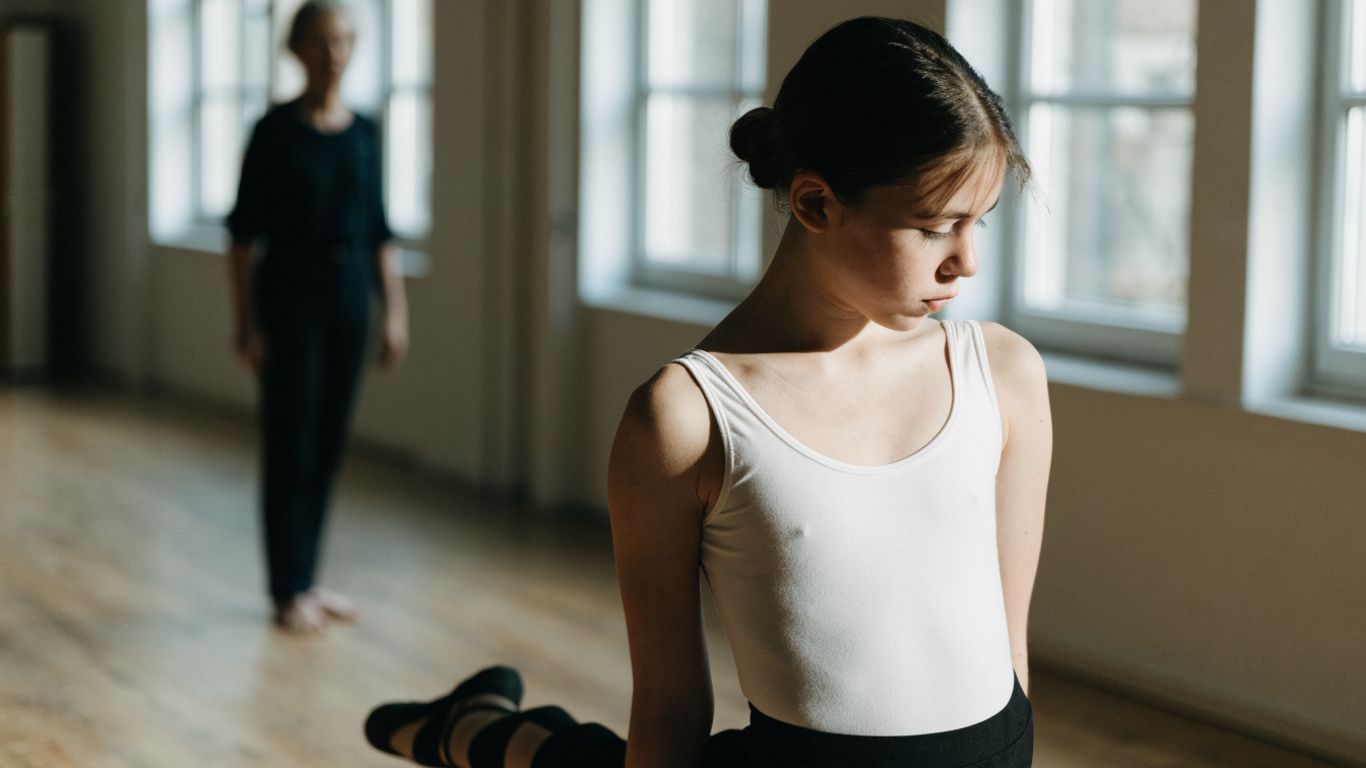
So, what does pull up mean in ballet in practical terms? Picture the spine lengthening gently upward while the shoulders stay soft and the breath keeps moving. The chest stays natural rather than pushed forward. The lower abdominals draw lightly in and up, and the back of the neck feels long.
A useful test: if a dancer can still breathe easily and turn the head freely, the pull-up is probably right. If the breath stops or the neck stiffens, the dancer is gripping rather than lengthening.
Common Ways Young Dancers Misread the Cue
Children who hear “pull up” for the first time often respond in predictable ways. Each one is a sign the cue has been heard as “lift your chest” rather than “grow tall”:
- Shoulders rising toward the ears
- Ribs flaring forward as the chest lifts
- Knees locking back to make the legs look straighter
- Breath held while trying to stay still
The fix is rarely another “stand up straighter.” Teachers usually offer one simple, specific cue, such as “let your shoulders melt down” or “close your ribs,” and let the dancer try the movement again. One correction at a time keeps a young dancer focused instead of self-conscious.
Correct Ballet Posture from Head to Feet
Correct ballet posture is a coordinated arrangement of the body, not one fixed shape that every dancer must copy. Bodies differ in proportion and natural flexibility, so the goal is the same balance in each body rather than an identical look. Working through the body from top to bottom makes it easier to understand.
Head, Neck and Shoulders
The head should feel balanced on top of the spine, neither pushed forward nor tipped back, with the gaze level. The shoulders rest down and wide without being forced. When the arms move through port de bras, the shoulders stay quiet while the arms do the work. Tension here often shows up as a short neck or raised shoulders during arm movements.
Ribcage, Spine and Pelvis
This is where most posture corrections happen. The ribcage should sit directly over the pelvis, with the front ribs closed rather than flared. The pelvis stays in a neutral position, neither tipped forward (which arches the lower back) nor tucked under (which flattens it). Teachers sometimes describe the hip bones as headlights that should shine straight ahead.
Tucking the pelvis is one of the most common faults in young dancers, because it can make turnout look bigger for a moment. In reality, it removes the natural curve of the lower back and makes balance harder. A neutral pelvis, supported by the deep abdominal muscles, is the base of good ballet alignment.
Legs, Knees and Feet
The legs stay long, with the knees straight but not pushed backward. Some dancers have naturally hyperextended knees that bend slightly past straight, and they are taught to hold the knee in a controlled, straight line rather than locking it. The feet spread weight evenly across the big toe, little toe and heel, without rolling inward or outward.
Turnout, the outward rotation of the legs, comes from the hip joints. Twisting the feet farther out than the hips can rotate puts strain on the knees and ankles.
| Area | What good alignment feels like | What to avoid |
|---|---|---|
| Knees | Long, straight and controlled | Pressing or locking them backward |
| Feet | Even weight across three points of contact | Rolling onto the inner or outer edge |
| Turnout | Rotation the hips can hold | Twisting from the feet alone |
If any position causes pain or ongoing discomfort, the dancer should stop and tell the teacher. A dancer with persistent back, hip or knee pain should see a physiotherapist rather than push through it.
Core Engagement for Dancers: How to Engage the Core in Ballet
Core engagement for dancers is what makes “pull up” possible. Without support around the centre, lengthening the spine turns into lifting the chest. With it, the torso stays steady while the arms and legs move.
The Deep Core Muscles Behind “Pull Up”
The core muscles that matter most in ballet are not the visible “six-pack” muscles. They sit deeper:
- Transversus abdominis: the deepest abdominal layer, wrapping around the waist like a corset
- Pelvic floor: the base of the core, supporting the torso from below
- Multifidus: small muscles along the spine that steady each vertebra
- Diaphragm: the main breathing muscle, forming the top of the core
When these muscles work together, the torso is supported from all sides. Dancers learn to engage the core in ballet at a low, steady level, enough to stay stable without bracing. Breathing continues the whole time, because the diaphragm is part of that support system. A dancer who holds the breath to stay balanced is gripping rather than engaging. Dance science organizations such as the International Association for Dance Medicine & Science (IADMS) take the same view of core support in dance training.
Imagery Teachers Use to Help Kids Find Their Core
Children rarely respond to anatomy terms, so ballet teachers use imagery instead. Some of the most common pictures include:
- “Zip up your jacket”: drawing the lower abdominals gently in and up from the hips toward the ribs
- “A string from the top of your head”: growing tall without lifting the shoulders
- “Close your ribs like a book”: stopping the front ribs from flaring
- “Headlights forward”: keeping the hip bones level and facing front
Images like these turn an abstract instruction into something a child can feel and repeat. The best image depends on the dancer, which is why teachers often try several before one clicks.
How Ballet Alignment Supports Balance, Turns and Turnout
Ballet alignment keeps body weight stacked over a small base of support. On flat feet that base is the whole foot; on demi-pointe it shrinks to the ball of the foot. The smaller the base, the more posture matters, because any lean or tilt pulls the dancer off balance.
Turns show this clearly. A pirouette needs a balanced preparation, a stable torso during the rotation and a controlled finish. A dancer who leans or lets the ribs flare will usually travel or fall out of the turn, even with a strong push. Correct ballet posture is often what turns a wobbly pirouette into a clean one.
Turnout depends on alignment too. When the pelvis stays neutral and the core is engaged, the deep hip rotators can do their job. When the pelvis tucks, turnout may look bigger for a moment but becomes harder to control. Every dancer’s natural range is different, and it is built gradually in class rather than forced.
Ballet Posture for Kids: How Good Habits Are Built Gradually
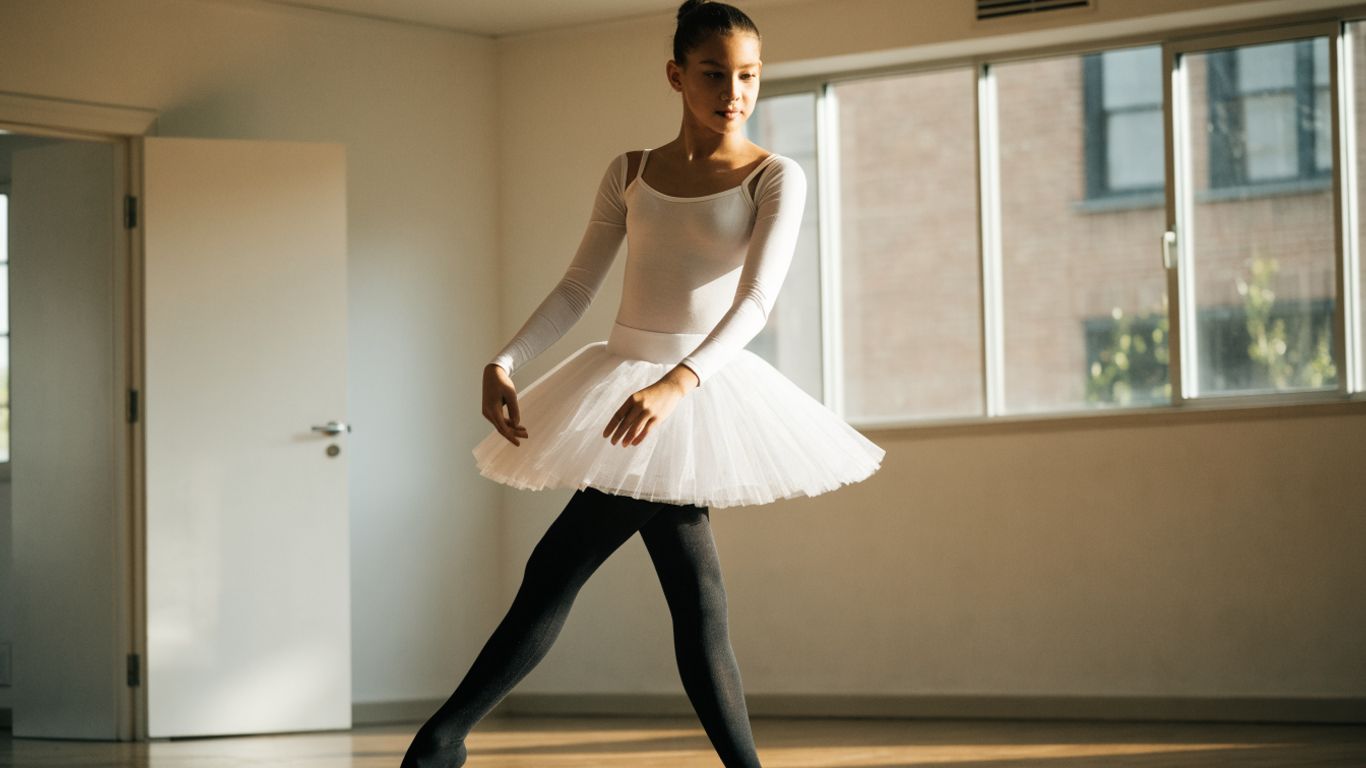
Ballet posture for kids develops as children gain strength, coordination and body awareness, and that takes time. A child may hold a lovely position one week and forget it the next when learning a new step. That is a normal part of learning.
What Young Dancers Practise at the Barre in Early Classes
In pre-ballet and early levels, posture is taught through simple, repeated exercises: standing in parallel and first position, small pliés, rises onto demi-pointe and basic arm positions. Each exercise is short and set to music, so children practise holding alignment while moving rather than standing still and thinking about it.
Teachers keep the language simple: grow tall, shoulders down, feet flat on the floor. At Canadian School of Dance, the youngest students start in pre-school and pre-ballet classes, where these foundations are introduced through play, music and imagery before formal technique begins.
Signs a Child’s Posture Is Improving
Progress usually shows up in small ways rather than one big change. Parents might notice that a child:
- Resets their stance without being reminded after travelling across the floor
- Moves the arms without the shoulders lifting
- Keeps breathing during balances
- Responds to a familiar cue quickly and without frustration
If a child’s posture still looks uneven, there is no need to add extra corrections at home. Teachers who know the child’s stage of development can decide which adjustment to work on and when. A parent’s most useful role is encouragement.
Good Posture for Dancers Beyond the Studio
Good posture for dancers does not mean holding a ballet position all day. Outside class, the body should move between many positions, and shifting while sitting or standing is healthy. Trying to stay in perfect placement at a desk or the dinner table usually creates tension rather than better posture.
What does carry over is awareness. Dancers often notice sooner when they are slumping or holding tension in the shoulders, and they know how to reset. Rest, sleep and free play matter for young dancers too, since growing bodies need time away from structured training.
Build Strong Ballet Posture at Canadian School of Dance in Nepean
Strong ballet posture is built week by week under qualified teachers who can see how each dancer moves. Canadian School of Dance, a dance studio in Nepean at 35 Larkin Drive, has taught syllabus-based ballet since 1986, with options for every stage:
- Pre-school and First Steps classes for the youngest dancers learning their first positions
- Recreational and competitive programs for children and teens building technique
- Private lessons for focused one-on-one work on alignment
- Technique Week for concentrated technique training
- Adult dance classes for adults starting or returning to ballet
Check the current class schedule, see what dance families say, then book a trial class to see how posture is taught at each level. Questions about the right class? Contact the studio.
Conclusion
“Pull up” is a cue to lengthen and support the body, not to lift the chest or lock the shoulders. With a neutral pelvis, gentle core engagement and steady breathing, ballet posture becomes the base for balance, turns and healthy turnout. Young dancers build it gradually through good teaching and patient practice, and those habits carry into every style they learn.
Frequently Asked Questions
What does “pull up” mean in ballet?
It means lengthening the body upward while the deep core muscles keep the torso steady. The shoulders stay relaxed, the ribs stay closed and the breath keeps flowing. It does not mean lifting the chest or tensing the shoulders, which are the two most common ways the cue is misread.
How do you engage your core in ballet?
Draw the lower abdominals gently in and up, as if zipping up a snug jacket, while continuing to breathe normally. The effort should be steady and low-level, enough to support the spine without bracing. If the breath stops or the stomach feels rigid, the dancer is gripping too hard and should ease off.
At what age should kids start learning ballet posture?
Basic posture awareness can begin as early as age 2 in pre-school dance classes, through simple cues like “grow tall” and play-based movement. Formal placement work, such as a neutral pelvis and controlled turnout, builds gradually over the early levels of training. There is no need to rush, because posture develops along with a child’s strength and coordination.
Can adults improve their ballet posture as beginners?
Yes. Adults often understand posture cues quickly because they can relate them to anatomy and everyday habits. Adult ballet classes follow the same barre-then-centre structure, so posture is practised in every class. Progress depends on consistent attendance more than starting age.
Should you force turnout to improve alignment?
No. Turnout should come from the hips and stay within the range the dancer can control. Forcing the feet farther out than the hips can rotate strains the knees and ankles and usually tips the pelvis out of alignment. Teachers build turnout gradually, and dancers should never compare their range with anyone else’s.
Is ballet posture the same in jazz, lyrical and contemporary dance?
The foundation is similar: a stable core, balanced alignment and controlled weight placement. Other styles change the shape on top of it. Jazz uses more parallel positions and isolations, while contemporary uses curves, spirals and floor work that deliberately break the vertical line. Dancers with solid ballet posture usually find these variations easier to control.


